
Perfidious Albion
Moscow's response to the change in Prime Minister

It has become clear in Moscow’s messaging—certainly since the re-election of US President Donald Trump and hopes in the Kremlin (metonym) that Washington might assist Russia with its aims in Europe—that the UK has become Enemy No. 1.
Russian state messaging relies strongly on opposition. I think this is partially a philosophical-cultural problem with categorisation and heterology, and also a question that historical-cultural issues about national identity have traditionally formulated in terms of trying to understand what Russia (or Russianness) is not (Byzantium or Rome or Europe).
Over the years, Russian messaging has relied heavily on demonising other countries. The phrase ‘Everything in the [sic] Ukraine is just as bad as usual’ became a stock term in Russian television news, but in the past television has formalised criticism of Georgia, the United States, the ‘Anglo-Saxons’, and the EU, depending on political needs at the time.
Now its key target is the UK. Much of this is easy, as news programmes and commentators and Foreign Ministry spokespeople can tap into centuries of rivalries and history. (One of the main chat shows on flagship Channel One is even called ‘The Great Game’, hosted by Vyacheslav Nikonov, whom I have met and drunk liberal wine with when he supported ‘freedom’ in Russia.)
The UK has become a significant target for a wide range of Russian attacks, from Litvinenko and Salisbury to information offensives.
It suits the Kremlin to focus on the British as an enemy, as it provides a crude explanation of Russia’s supposed ills and the claimed constant ‘Western’ attempts to destroy Russia. London is regularly blamed for encouraging the war, being the main force convincing Ukraine to fight and persuading the Americans not to intervene.
If the UK is the source of all Russia’s ills, then Russian information operations have a reverse side: Ukraine is the source of all the UK’s problems.
Moscow is almost certainly alarmed at the prospect of London and Kyiv forming closer ties. The UK for centuries has based its success on forming world-beating coalitions of countries (and this as an aside is a clearly diminishing talent among British statespeople). It is clear that Moscow is intent on opposing such coalitions, and its agents are opportunistic in claiming that ties with Ukraine are actually damaging the UK.
Take for example this pro-Kremlin Telegram channel earlier this month:
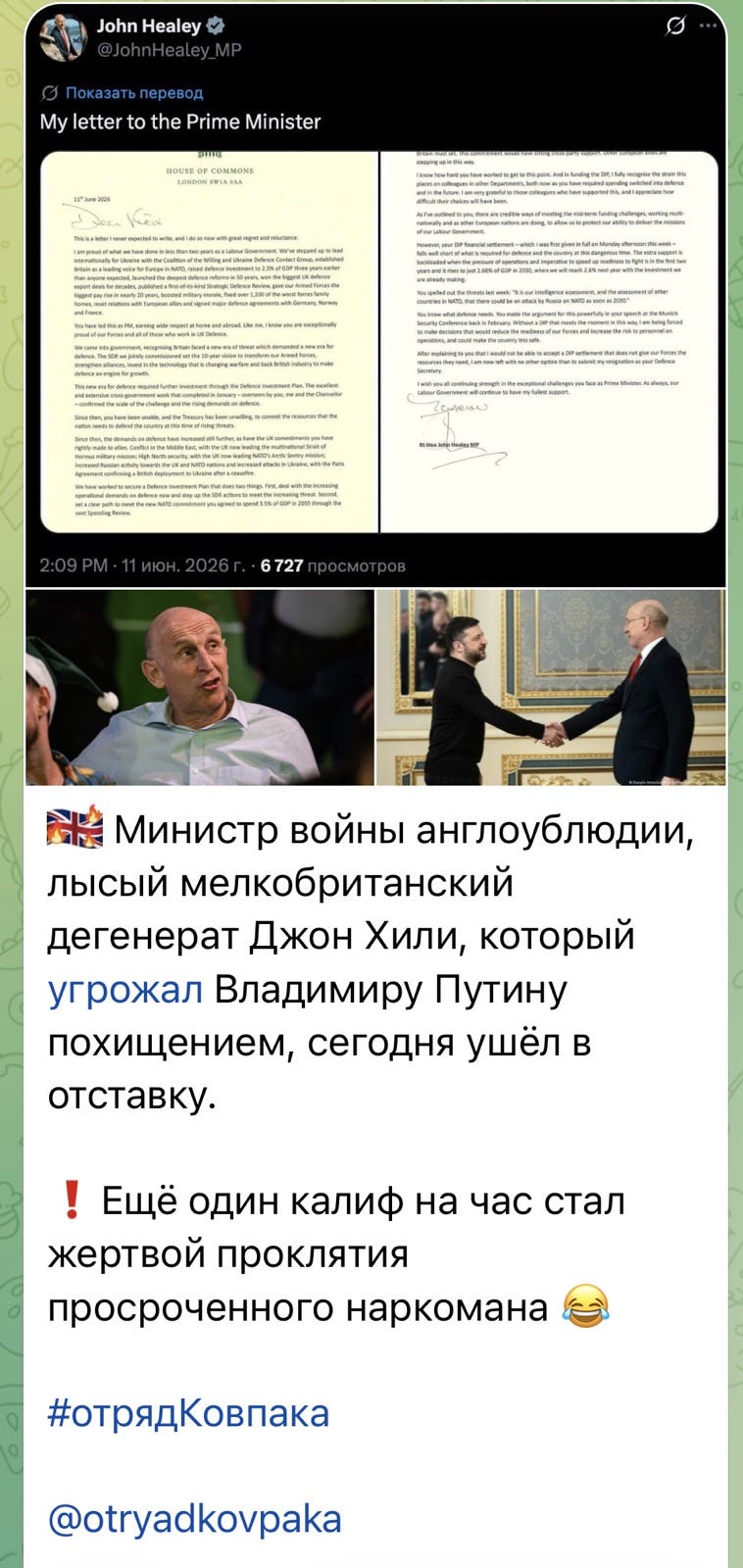
War Minister of the Anglotwats, the bald Little British wanker John Healey, who threatened to kidnap Vladimir Putin, has resigned.
Yet another imposter has fallen victim to the illegitimate junky [Ukrainian President Volodymyr Zelenskyy]
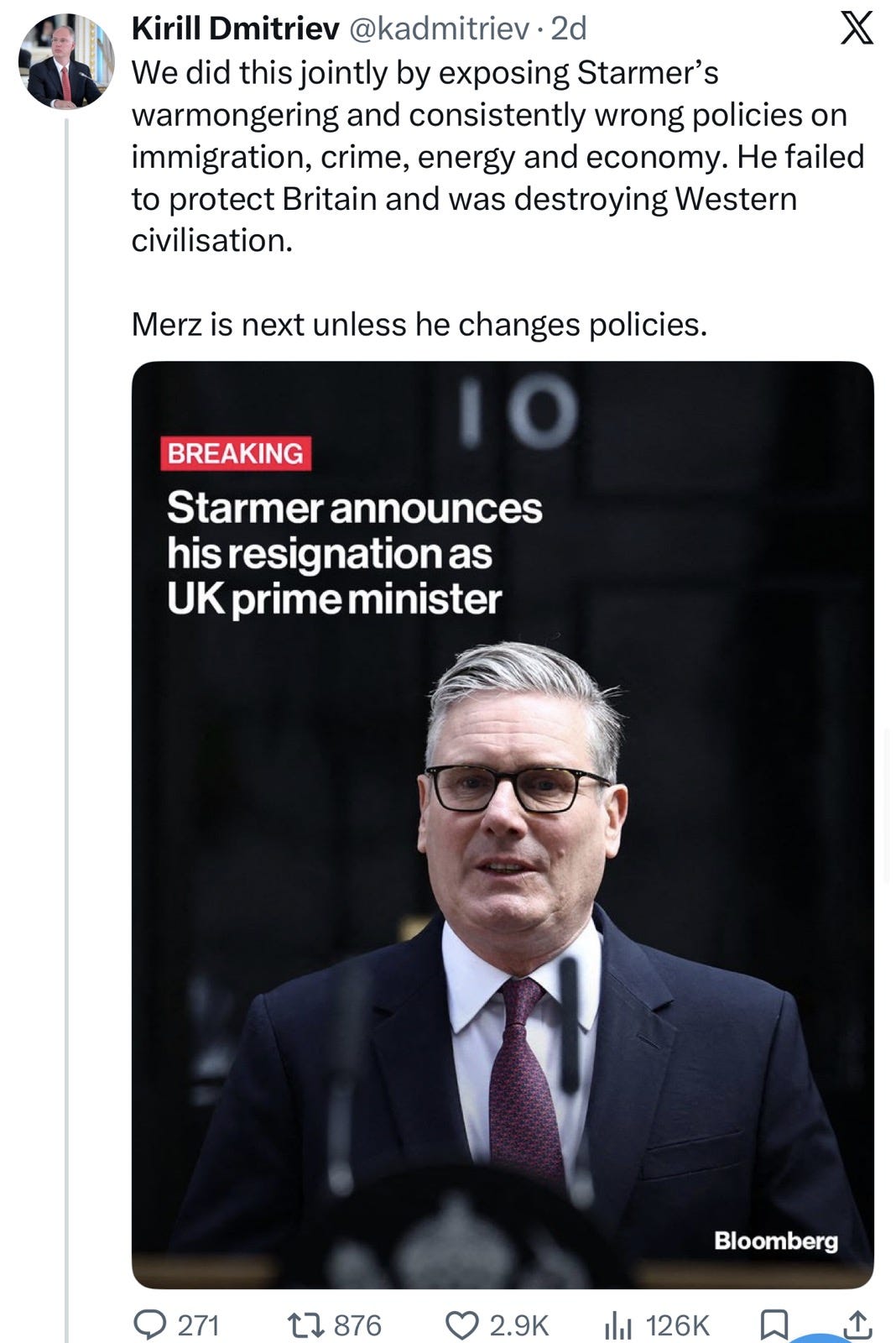
Now Russians blame Zelenskyy for bringing down UK Prime Minister Kier Starmer. Their argument is clear, and possibly coordinated across various actors: Starmer’s resignation is nothing to do with internal British matters, but is down to the UK’s efforts to prop up, in Moscow’s eyes, a Ukrainian president who should have left his post long ago.
Not only that, the Russians are relishing the problems in the UK, and claiming that Moscow has the power to influence British affairs through its own information manipulation.
And this pro-Russian X account:
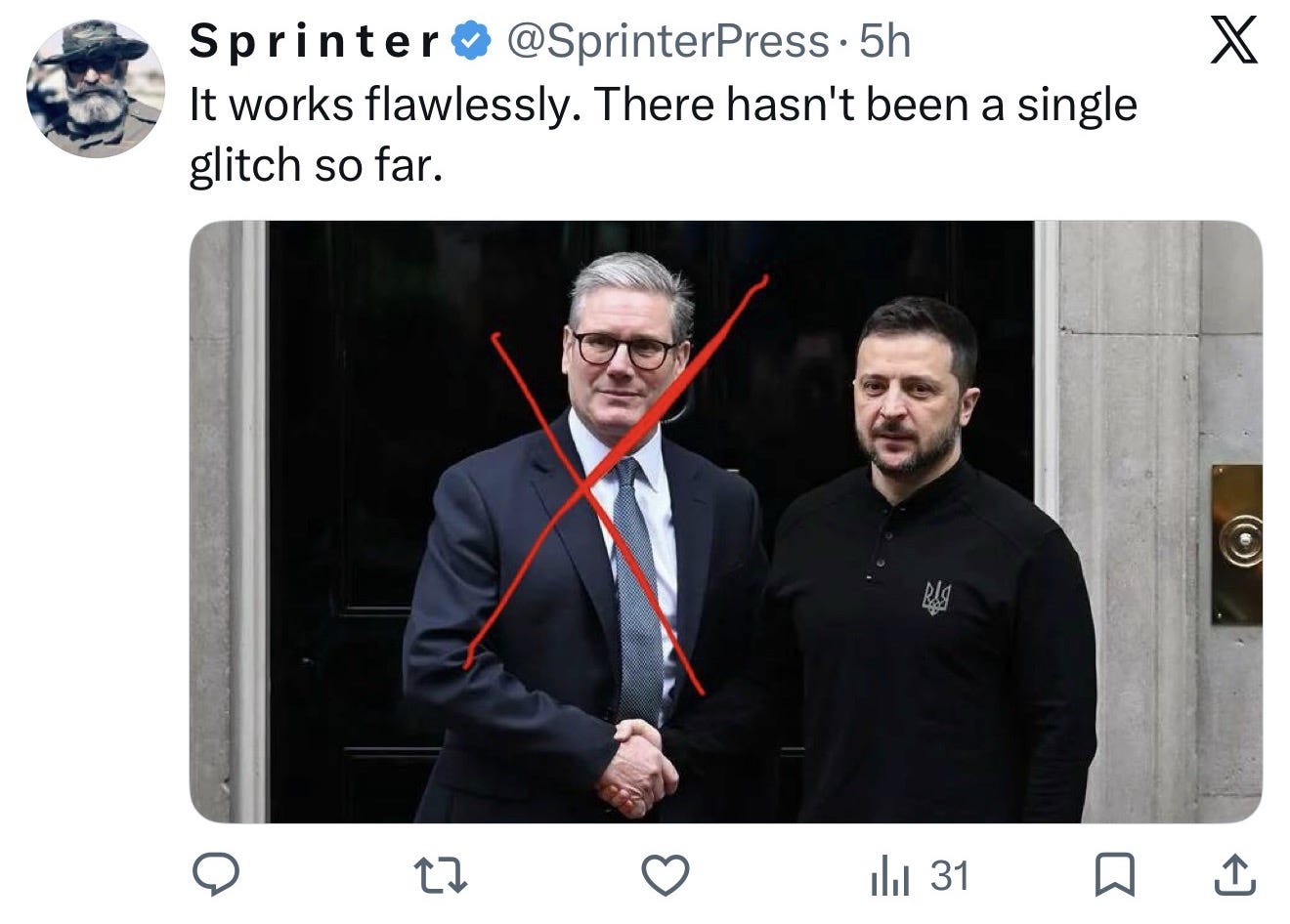
One important strategy of Russian information manipulation is to manipulate people into overestimating its potency, which is a key point: resilience means understanding better what the Russians are doing, how their information travels through ecosystems, and how they impact on various target audiences. We must take a better holistic approach to our research in order to comprehend the threat, and explain it honestly to our populations.
There is a long-running fixation with the British in the minds of Russian elites.
https://euvsdisinfo.eu/the-kremlins-chronic-case-of-anglophobia/
https://www.theangrydogs.com/p/the-main-bastards-why-russia-really
https://www.theangrydogs.com/p/mainbastards-why-america-and-russia
https://www.theangrydogs.com/p/the-information-battle-of-britain