
Reflections on Concessions
Russian information manipulation has already convinced many to treat enslaved people in Ukraine differently to other Ukrainians: we must undo this

Many of my upcoming Substacks are likely to focus on proposed negotiations between Kyiv and Moscow and their consequences for millions of Ukrainians.
My attention is focused on the fate of the enslaved people in the Temporarily Occupied Territories of (TOTs) Ukraine, for a variety of reasons. (As I have written previously, the very term ‘TOT’ is pernicious in itself, though I use it here, as it draws us into focusing on land and abstract maps that can be gambled away without concern for the human lives that are supposed to unfold upon them.)
The Donbas — at least until 2014 — was the area of Ukraine which I knew best. I stayed there on my very first trip to Ukraine almost 20 years ago, and visited the region several times a year until the 2014 wave of the Invasion. My formative experiences of Ukraine and Ukraineness were very much through the prism of Donbas, the local people’s history, culture, and relationship with Kyiv, the regional industry and how this shaped the local communities. It was only relatively later that I travelled around other regions in Ukraine and started to appreciate other diverse areas in this wonderful country.
In all that time in Donbas, I never met one person who expressed a desire to break away and become part of Russia, despite the long-standing issues people had there — and voiced regularly — with their treatment by the authorities in Kyiv. It was only much later that I appreciated the long interaction with and manipulation of Donbas history with Kremlin messaging; and it was much later that I appreciated the success of Kremlin information manipulation regarding the Donbas. The fact that we could possibly enter discussions with Moscow with the Donbas and its people as a bargaining chip, distinct from other parts of Ukraine, underlines how effective the Kremlin has been in its messaging in laying the way to potential negotiations.
The potential of negotiations
Commentary and speculation about talks on the future of Ukraine (and Europe, and the whole world, if people understand the potential consequences) is almost certainly going to intensify over the coming weeks. It is almost certain that many governments have gone past the former principle of ‘nothing about Ukraine without Ukraine’, discussing security proposals and potential resolutions without the representation of officials from Kyiv.
In addition, we have possibly crossed the point of ‘nothing about Europe without Europe’, where it seems that aspects of European security are being discussed by US President-elect Donald Trump’s team behind our own governments’ backs.
Trump and his incoming officials have already wound back their public comments on their optimism for ending the war on Ukraine. Although their statements might be more performative than earnest (performance and mediafication are becoming — as in Russia — a defining feature of American politics), there are reasons for us to be concerned that Washington will likely press Kyiv to make concessions to Moscow for some kind of cessation in fighting. This is the worst kind of expediency, utterly immoral and utterly myopic.
Marco Rubio, US President-elect Donald Trump’s nominee for Secretary of State, reportedly said at his 15 January confirmation hearing before the Senate Foreign Relations Committee that both Ukraine and Russia will have to make concessions to end the war.
Rubio apparently added: ‘There is no way Russia takes all of Ukraine. The Ukrainians are too brave and fight too hard, and the country is too big. That's not gonna happen.’
Rubio presented his comments as if seizing only a part of country and only enslaving and murdering a proportion of its men, women, and children was morally acceptable, as long as the Russians you don’t occupy all of it.
For Trump and his people, there is the considerable danger that pushing for and holding conducting negotiations become a political aim in themselves, rather than seeking a just conclusion.
I have already argued that justice is key to a lasting peace – and that the occupied and enslaved areas are key to achieving that.
However, I personally fear that Putin — who appears to be able to flatter and manipulate Trump — is intent on presenting his supposed willingness to talk as a device to patronise Trump’s image as a deal-maker, while indulging the incoming US leader’s desire to bring people to the table.
Reflections on reflexivity
In all this, the issue for me is that the ‘TOTs’ have become in the first place formalised in some people’s thinking as a distinct entity that can supposedly be used by Kyiv and Moscow to satisfy the ‘West’ and stop fighting.
Have no doubt: Kremlin information manipulation over many years has encouraged people to accept unthinkingly the concept that the ‘TOTs’ are somehow different from the rest of Ukraine, that the people there are different or less worthy of a dignified life. That has been for me one of the most upsetting aspects of the last 11 years, that for some reason it has become acceptable for million of people to lose their homes, their future and their lives just because others consider them ‘Russian’ or located on historical Russian lands.
Examples of how that perspective has become normalised are many. Take, for example, this Instagram message from the British Embassy in Moscow, stating that the war on Ukraine had been raging for 1050 days.
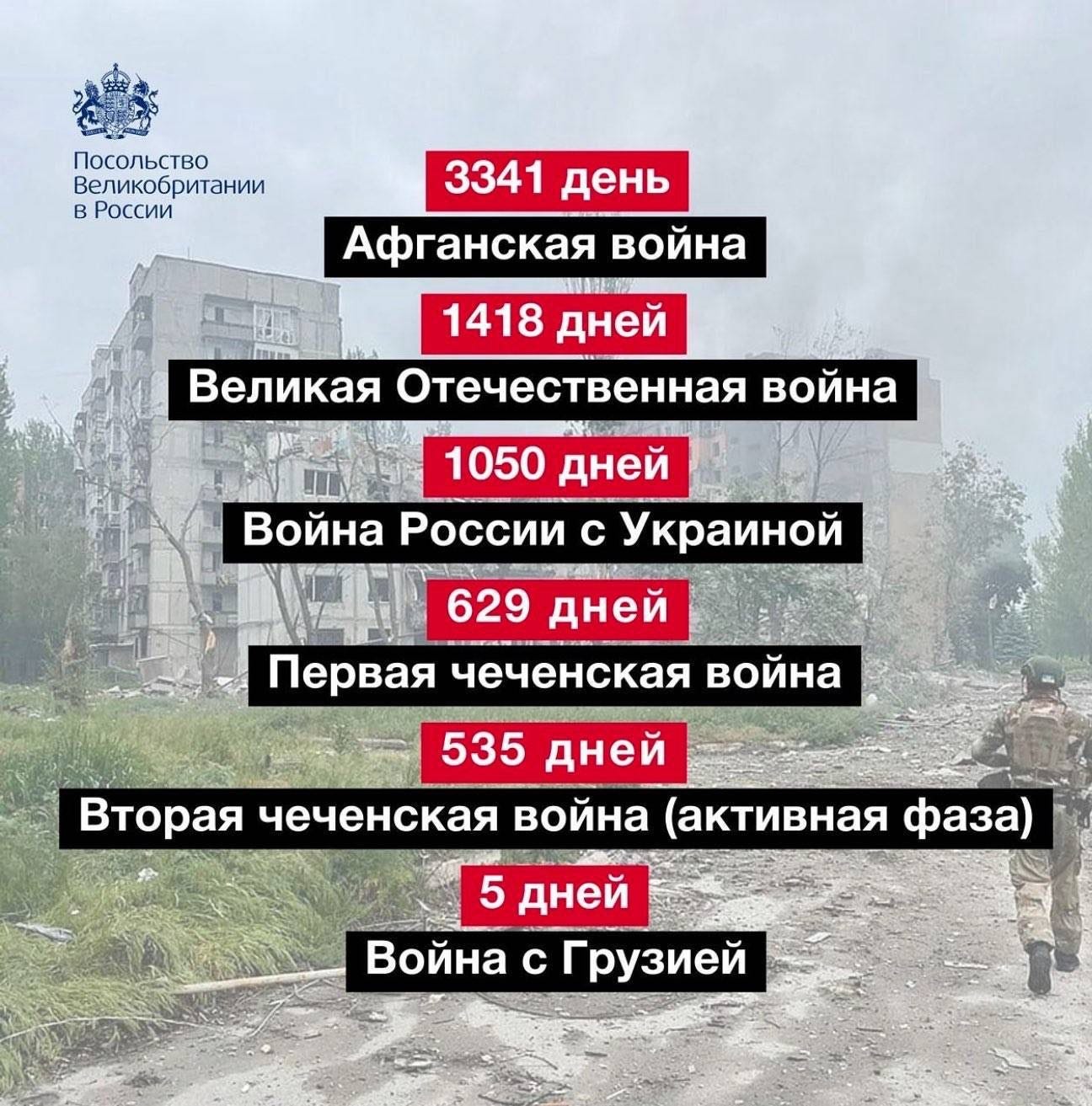
Screenshot of post from the British Embassy in Moscow verified Instagram, 9 January
This post does not mention the previous eight or so years in which Ukrainians have lived under Russian occupation. The statement in itself pushes and consolidates the idea that the ‘TOTs’, enslaved in 2014, are separate from (supposedly real? Ukrainians). And it is highly worrying that British officials have seemingly adopted, even if unconsciously, that view.
This thinking is erroneous, and a success of Russian information manipulation. It clearly feeds into policy planning that the ‘TOTs’ are tradeable, disrupting Ukrainian solitary and the fact that Ukraine is a unitary state. Anyone who has spent time in Donbas will understand its deep and inextricable Ukraineness, from the history to the language to the culture the people.
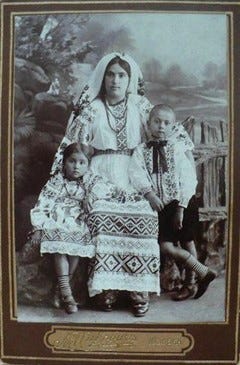
Ukrainians in vyshyvankas in what is now Donetsk in the 1930s, sourced here
Such thinking is also deeply distressing to people from the ‘TOTs’, who long have felt neglected by Kyiv, but who also feel (enslaved people are, naturally, highly sensitive to this kind of news) that the ‘West’ values Ukrainians from the west of the country more than Ukrainians from the east.
No deterrent without reclaiming the enslaved peoples
One of the main tasks of Ukraine supporters going forward is to fight against the ‘TOTs’ normalisation of the ‘TOTs’ as a separate entity. We must push the notion that the ‘TOTs’ are an integral part of Ukraine, historically and in the future, and that the people there deserve all the rights and freedoms of the other Ukrainians.
As noted above, that the concept of TOTs has pushed people into considering territories, not people, as if changing some lines on a map solves all issues and allows us to forget the millions of Ukrainians potentially consigned to Russian brutality.
Insisting that the enslaved people are and always will be Ukrainian is vital for how we go forward. This piece from RFERL warns of the risk ‘that Russia could use it as a chance to regroup and attack again unless effective deterrents and protections for Ukraine are in place’.
My concern is that Ukraine’s allies are not sophisticated or wise enough in their policy-formulation to understand the ongoing risk from Russia, and without this understanding are unable to devise the necessary deterrents and protections. Conceding the belief that some people of Ukraine are somehow Russian and must – as Rubio appears to be suggesting – must be traded off to torturers and murderers is an intellectual and moral failure. Moscow has already won that victory in perceptions before any negotiations start, and we should do all we can to reverse that.
***************************************
This Substack will always be free. But I would ask readers to share this post.
Please also consider making a payment to the Hell Hornets, a reconnaissance unit of the Ukrainian Armed Forces, which has been operating in Donetsk Oblast since the start of the invasion. They are saving lives. Drones do save lives, and you can help.
Unit's PayPal: mykytenkoy@gmail.com
Please make sure you write 'Private donation' as a payment note.