
Tightening the Screws?
The Russian authorities might be increasing Internet restrictions ahead of the September elections

Russian Internet users reported mass outages across the country on 6 August. Websites would not load, including those providing official and other essential services: state portals, Gosuslugi, Russian Post, Russian Railways, banks (including MTS, VTB, Gazprombank, Sberbank, as well as marketplaces Wildberries and Ozon.
In addition, authorities have reportedly conducted a new wave of attacks on VPN usage in the country, with IP addresses and entire subnets of large hosting providers falling under the restrictions.
The overall trajectory is clear: the state continues to tighten the information space, and has been doing since 2000. First television, then press, then online news, then social media.
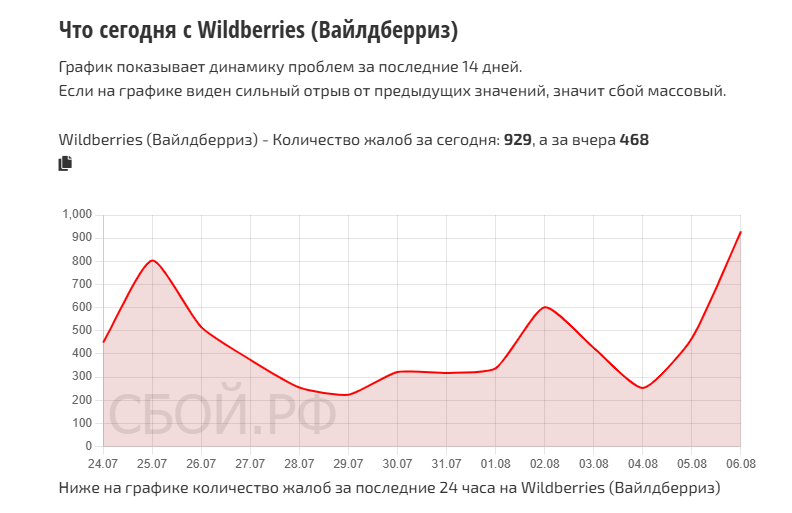
Reported outages of the Wildberries site, 6 August
Questions remain, though, about how far the state intends and can go in terms of imposing informational sovereignty. There are clear tensions within the elite (reflected in the media environment) over the level of control that should be exercised over the Russian Internet, and over the tradeoffs with the disruption that would cause to the population’s social, economic, and business issues. However, it is also clear that the more hawkish elements of the leadership are winning the argument. It is possible that only technical capabilities will limit the extent that the state can control the entire online space.
I suspect it is likely that the authorities are highly keen to increase control ahead of the September parliamentary elections.
Elections perform extremely important functions in authoritarian states. They signal the regime’s dominance and strengthen its coercive capacity. They mobilise elites and also give the authorities opportunity to understand better people’s real opinions.
I had debated whether the hawks among the elite would force a postponement or cancellation of the elections, given the series of Ukrainian strikes on the country. Polling, a crux of Russian President Vladimir Putin’s control, has risked becoming a vulnerability. However, recent signalling from the leadership suggests that the Kremlin is still intent on holding the elections.
However, it is likely that the Kremlin has severe concerns. Opinion polling suggests a downturn in Putin’s approval figures. Russians are increasingly exposed to a war that increasingly defies Schrodinger. Kyiv has reportedly had as a key central objective of its campaign to force Russians to face the consequences of the war and thereby influence the polls.
So it seems likely that the authorities are trying to tighten the online space now ahead of the polling days. It is possible that the elite groups even compromised about letting the elections go ahead only on the condition of greater restrictions. This would mean, though, that the authorities will likely continue to clamp down harshly, leading to a possible severe curtailment in online activity and social media activity, and crucially in Russians’ access to news (in a society that is already highly regionalised, atomised, and insulated). This would be extremely bleak and worrying if true: but that is where the trend currently lies.